Choosing the Right High-Strength Epoxy Glue for Tough Repairs in Singapore
Why Epoxy Deserves a Place in Your Repair Kit
Living in Singapore, where humidity and constant rain test every adhesive, I have learned to be picky about what I trust. Over the years, I have watched cheap glues fail within weeks, especially on metal gates and outdoor furniture. That is why I now reach for a high-strength epoxy glue when the job demands more than a quick fix. Unlike ordinary craft glues, epoxy resin paired with a hardener creates a bond that can handle real stress, and in a tropical climate, that makes all the difference.
Epoxy is not a single product. It is a family of two-part adhesives that cure through a chemical reaction between the resin and the hardener. The result is a structural bond that outperforms most single-component glues in tensile strength, heat resistance, and solvent resistance. For anyone in Singapore who has tried to repair a cracked plastic chair or a leaking pipe joint, the right epoxy can turn a frustrating task into a lasting solution.
What Makes Epoxy Different from Other Adhesives
Most people grab a tube of super glue for small fixes, and that works fine for tiny gaps. But when you need to bond two pieces of metal or fill a gap in concrete, super glue falls short. Epoxy does not just stick to the surface; it fills the space between parts, creating a solid block of material once cured. That gap filling property is why epoxy is the go-to for uneven or rough surfaces.
Consider a typical job in a Singaporean home: reattaching a loose ceramic tile on a balcony. A construction adhesive might hold for a while, but the constant sun and rain will weaken it. A high-strength epoxy glue, especially one rated for outdoor use, will resist moisture and temperature swings much better. The chemical bond formed during curing is also more resistant to impacts, so a knocked table leg or a dropped tool is less likely to break the joint.
Know Your Surfaces: Metal, Plastic, and Concrete
Not every epoxy works on every material. Metal bonding is where epoxy truly shines, particularly with steel and aluminum. I have used J-B Weld for a cracked engine block on an old car, and it held for years until I sold the vehicle. For marine grade repairs, such as sealing a small hole in a boat hull, epoxy is the standard because it stands up to constant water exposure. Devcon also makes excellent epoxies for industrial settings, and their products are often what engineers specify for critical joints.
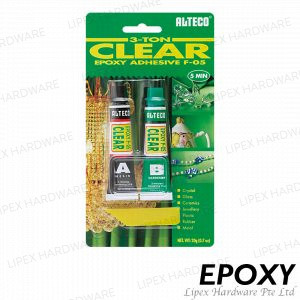
Plastic repair is trickier. Some plastics, like polyethylene and polypropylene, resist adhesion, and even the best epoxy will not stick well. But for common plastics like ABS or PVC, a high-strength epoxy glue can work beautifully. The key is to roughen the surface with sandpaper first and clean it with a solvent. In Singapore, where many household items are plastic, this tip saves a lot of money and keeps things out of the landfill.
Concrete repair is another area where epoxy excels. Cracks in a garage floor or a driveway can be filled with a thickened epoxy that bonds to the porous concrete. Unlike cement-based fillers, epoxy does not shrink, and it cures to a hard, durable surface. I have used Loctite epoxy for such jobs, and the repair has outlasted the surrounding concrete.
Choosing the Right Epoxy for Your Job
Walk into any hardware store in Singapore, and you will see shelves full of epoxy products. The choices can be overwhelming. The first thing to check is the curing time. Some epoxies set in five minutes, others take hours. Fast-setting epoxies are great for small repairs where you can hold parts together, but they give you little time to adjust. Slow-curing epoxies, like those from Devcon or J-B Weld, allow you to position everything perfectly and are better for larger projects.
Next, consider the strength you need. The packaging usually lists tensile strength in psi or MPa. For heavy-duty jobs, look for a product that states a high tensile strength, often above 3000 psi. That is a reliable indicator of a true high-strength epoxy glue. But remember, strength is not everything. Impact resistance matters too. A brittle bond can shatter if you drop something heavy on it, while a more flexible epoxy will absorb the shock.
Heat resistance is another factor, especially in Singapore's climate. Most epoxies handle up to 150°C, but some are formulated for higher temperatures. If you are bonding a part near an engine or a stove, check the specifications. Solvent resistance is also worth checking if the repair will come into contact with oils, fuels, or cleaning agents. A marine grade epoxy, for instance, is designed to resist saltwater and harsh chemicals, making it ideal for boat repairs or outdoor fixtures near the coast.
Practical Tips for Using Epoxy Effectively
Getting the best result from epoxy requires some preparation. First, clean the surfaces thoroughly. Dirt, grease, and moisture are enemies of adhesion. Wipe the area with a solvent like acetone or isopropyl alcohol and let it dry. Then, roughen smooth surfaces with sandpaper to give the epoxy something to grip. This is especially important for metal bonding and plastic repair.
When mixing the two-part adhesive, follow the ratio on the label exactly. Most epoxies require a 1:1 mix, but some are different, like 2:1 or 4:1. Using too much hardener or too little resin can result in a weak, sticky mess that never cures properly. I learned this the hard way when I tried to speed up a repair by adding extra hardener. The bond failed within a week, and I had to redo the job.
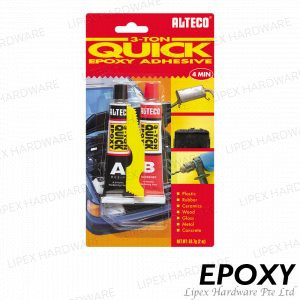
Another tip is to apply the epoxy sparingly. You do not need a thick layer. In fact, a thin, even coat creates a stronger bond because the adhesive is under less internal stress. If you are filling a gap, use a thickened epoxy or add a filler like silica to prevent sagging. For vertical surfaces, this is crucial, as thin epoxy will run.
Clamping is also important. Even fast-setting epoxies benefit from pressure while they cure. Use clamps, weights, or tape to hold the parts together. This ensures close contact and a stronger bond. The curing time listed on the package is usually for full strength, so wait at least 24 hours before putting the item under load.
Epoxy in the Singapore Context
Singapore's climate presents unique challenges. High humidity can affect the curing process. Some epoxies absorb moisture from the air, which can weaken the bond. That is why I always work in an air-conditioned room when possible, or at least in a dry, shaded area. Direct sunlight can also cause the epoxy to cure too quickly, leading to bubbles and weak spots.
For outdoor repairs, choose a product that is explicitly rated for exterior use. Many epoxies are water-resistant, but not all are waterproof. A marine grade epoxy is the safest bet for anything that will be exposed to rain or seawater. I have used Loctite Marine Epoxy for a kayak repair, and it has held up through multiple trips to the Southern Islands.
When you need to bond dissimilar materials, such as metal to plastic, epoxy is often the only practical choice. A high-strength epoxy glue can bridge the gap between different coefficients of expansion, which is a common issue in tropical temperatures. Without that flexibility, the bond will eventually crack as the materials expand and contract at different rates.
Trusted Brands and Where to Find Them
In Singapore, you will find reliable brands like Loctite, J-B Weld, and Devcon at hardware stores and industrial suppliers. These companies have decades of experience, and their formulations are consistently good. Loctite is well-known for its threadlockers and instant adhesives, but their epoxy range is equally impressive. J-B Weld is a favorite among DIY enthusiasts for its versatility and strength. Devcon is more specialized, often used in manufacturing and repair shops for high-performance applications.
For a wide selection, you can also check out Lipex, a supplier of sealants, tapes, and adhesive application tools in Singapore. They stock products that are suited to local conditions, and their team can help you choose the right adhesive for your project. Whether you are a professional contractor or a weekend warrior, having access to the right tools and materials makes all the difference.
Final Thoughts on Making Epoxy Work for You
Epoxy is not a magic solution for every problem, but it is the closest thing we have to an all-purpose structural adhesive. The key is to match the product to the job, prepare the surfaces properly, and give it time to cure. When you do that, a high-strength epoxy glue can outlast the original part, saving you money and hassle. I have repaired everything from a cracked motorcycle fairing to a loose balustrade, and epoxy has never let me down when used correctly.
So the next time you face a repair that seems impossible, do not reach for tape or a weak glue. Consider epoxy. In a place like Singapore, where weather and humidity are constant enemies, a strong bond is not a luxury; it is a necessity. With the right product and a little patience, you can fix almost anything and make it last.